
Is silicone food-safe? Here's what to look for
What ‘food-grade silicone’ actually means
‘Food-grade silicone’ is a regulatory category, not a marketing claim. In the United States, it means the silicone meets FDA standard 21 CFR 177.2600 for repeated food contact. In Europe, the equivalent is LFGB (German Food and Commodities Act). Both standards require the silicone to be chemically stable, free of certain fillers, and tested for migration of substances into food.
Not all silicone meets these standards. Industrial silicone, used in sealants and automotive applications, often contains fillers that can leach. Decorative silicone, used in some craft products, may not be tested at all. Without an explicit food-grade certification, assume any silicone product is not safe for food contact.
Why this matters for couch and kitchen accessories
Most silicone bakeware, kitchen tools, and food containers are food-grade. Most silicone phone cases, automotive parts, and decorative items are not. The line is whether the manufacturer specifies and tests for food contact.
For a couch tray that holds a drink, food-grade matters because the silicone is in direct contact with the cup. Condensation, spills, and the occasional drop into the cup well all create food-contact moments.
How to verify food-grade certification
- Look for explicit ‘FDA-approved’ or ‘LFGB certified’ language in the product description.
- Check the material specification. ‘Platinum silicone’ is a higher-grade version of food-grade silicone that uses platinum-cure rather than peroxide-cure.
- Verify the manufacturer’s product testing. Reputable brands publish or provide on request the test results for their silicone.
- Be skeptical of unspecified ‘silicone’ in low-cost imports. If the product description does not mention food safety, assume it is not certified.
The five properties of food-grade silicone
- Chemically inert. Does not react with food or drink.
- Temperature stable from about -40F to 450F. Safe for hot drinks and cold ones.
- Non-porous. Does not absorb liquids or trap bacteria.
- No leaching of substances under normal use.
- Resistant to UV, ozone, and most common cleaning agents.
What food-grade silicone is not
Food-grade silicone is not the same as ‘BPA-free.’ BPA is found in some plastics, not in silicone. A ‘BPA-free’ label on a silicone product is technically true but unhelpful, because no silicone contains BPA in the first place.
Food-grade silicone is also not automatically dishwasher-safe or microwave-safe. Those are separate certifications. Check each specifically if you need them.
About the Sofa Sidekick
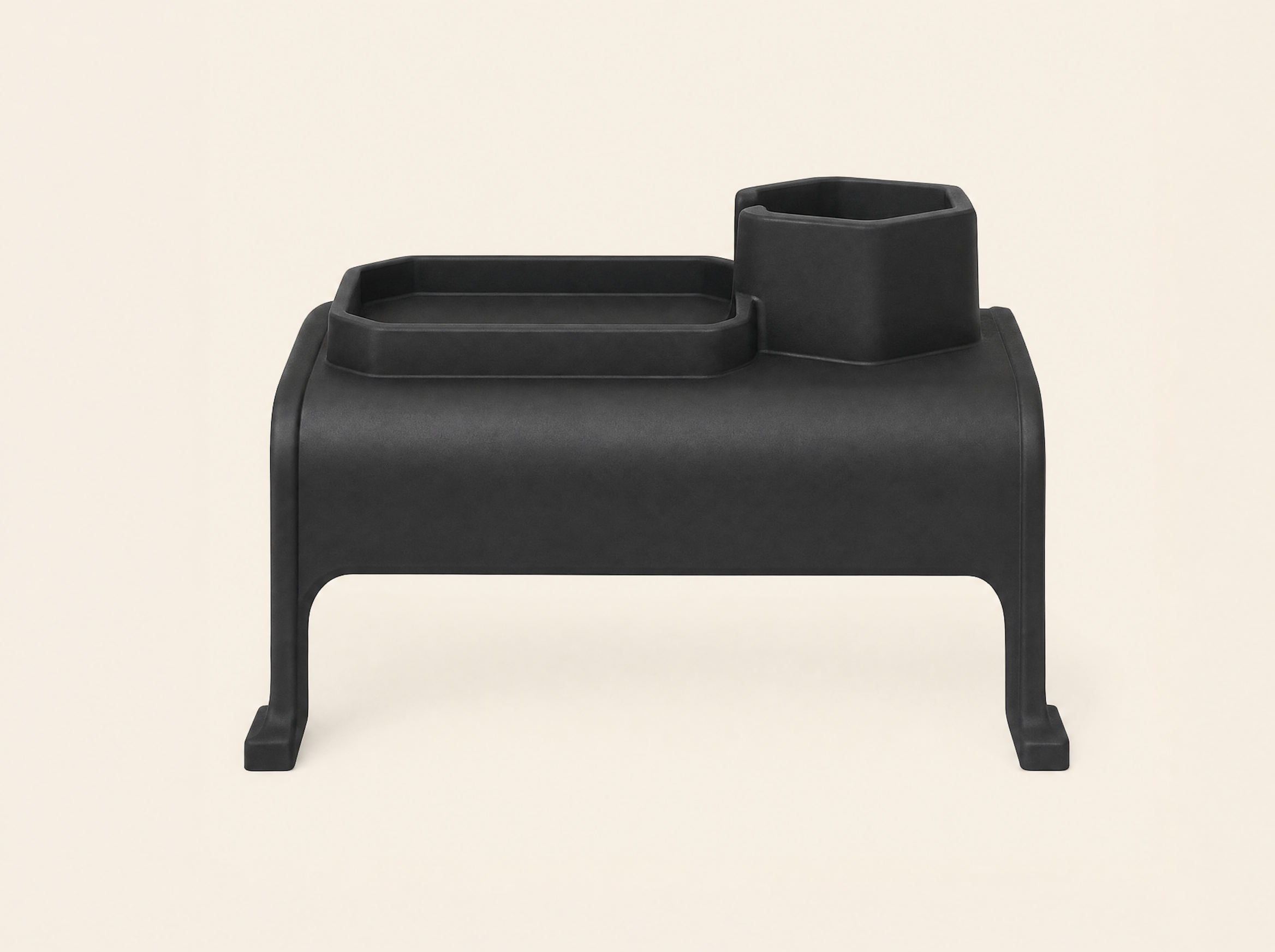
The Sofa Sidekick is made from food-grade silicone, FDA-compliant under 21 CFR 177.2600. The cup well is in direct food contact when condensation pools, and the flat tray surface is in food contact when you place a snack on it. Both surfaces meet the food-grade standard.
The weighted base inside the silicone is not in food contact, so it does not need food-grade certification. The outer silicone is what matters.
Food-grade silicone is one of the safest materials for repeated food contact, but the certification has to be explicit. Verify it before buying anything that will touch food, drink, or condensation regularly.
Frequently asked questions
Is the Sofa Sidekick safe for food contact?
Yes. The outer silicone is food-grade, FDA-compliant under 21 CFR 177.2600. The cup well and flat tray are both safe for direct food and drink contact.
What is the difference between platinum-cure and peroxide-cure silicone?
Both are food-safe. Platinum-cure silicone uses a platinum catalyst and is considered higher purity, with no by-products from the curing process. Peroxide-cure is older technology and acceptable for most food-contact uses, but platinum-cure is preferred for products that contact food at high temperatures.
Can silicone leach chemicals into food?
Food-grade silicone has been tested to confirm it does not leach above safe limits under normal use. Industrial or uncertified silicone may leach. Stick to food-grade certified products for anything that contacts food.